
Hydro Jetting vs. Snaking: Why the Same Drain Keeps Backing Up
5 min read
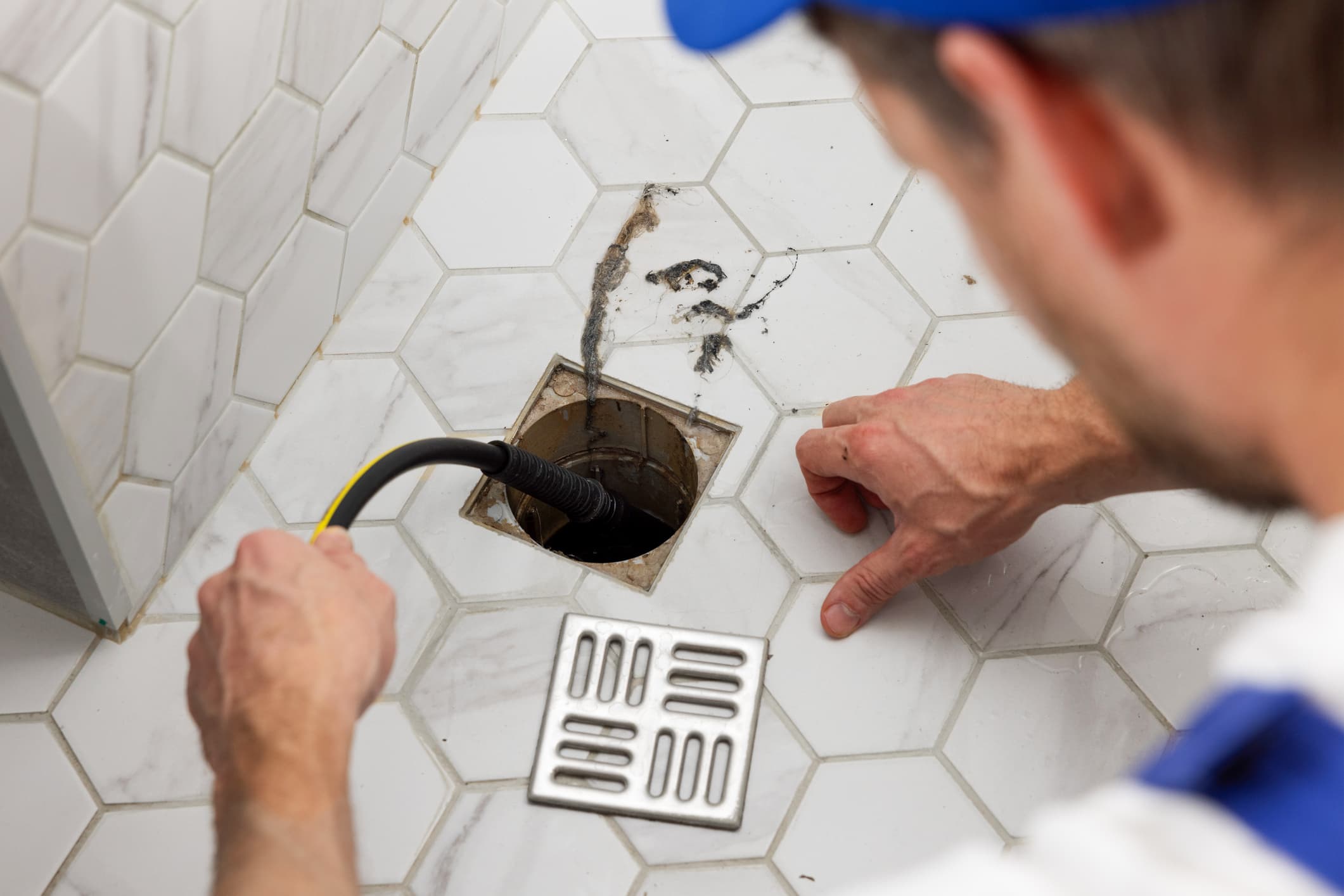
A drain that backs up once is an event. The same drain backing up again three months later is telling you something, and it is usually not what people assume.
It is rarely that the first plumber did a bad job. It is that the tool used to fix it does one thing, and the thing that actually causes the problem is something else. Across McMinnville and the rest of Yamhill County we see this most in kitchen lines and in the main sewer lines of older homes, and the fix depends on knowing the difference between snaking a drain and hydro jetting it.
Why does the same drain keep clogging?
A drain does not close from the middle. Picture the inside of a kitchen waste line after a few years of normal use. Grease goes down warm, cools somewhere along the run, and sticks to the pipe wall. Food particles stick to the grease. Soap scum binds it. The layer builds inward from the sides, slowly and evenly, year after year.
By the time water stops draining properly, the opening left in the middle of a three or four inch pipe can be about the width of a pencil. Everything else is wall.
The same thing happens in a bathroom line with hair and soap, and in a main sewer line with scale, sediment, and tree roots. The material changes. The shape of the problem does not.
What a drain snake actually does
A drain snake, or cable, is a steel coil driven down the line with a cutting head on the end. It finds the blockage and bores through it. Water runs again, often within seconds, and the sink empties in front of you.
That is a real fix and it is the right tool for a lot of jobs. A cable is what you want for a hard obstruction, for roots at a joint, or for a line that needs clearing right now at two in the morning.
But look at what it left behind. The pencil-width opening is now a thumb-width opening. The wall is still there. Everything that was building up before is still building up, from the same starting point, at the same rate. Which is why the second backup tends to arrive on a schedule.
What is hydro jetting, and how does it work?
Hydro jetting runs water down the line at 3,000 to 4,000 PSI through a nozzle that fires backward and sideways rather than forward. The jets strike the pipe wall, not the blockage. For scale, the hose on the side of your house runs at roughly fifty.
The nozzle pulls itself along the pipe on its own thrust, scouring as it goes, and the backward angle carries the debris out toward the cleanout rather than packing it further down the line. What comes back is the grease layer, the scale, and whatever was growing on it.
The pipe ends up close to the internal diameter it had when it was installed. Not a hole through the middle of the problem. The wall itself.
Is hydro jetting better than snaking?
Neither one is better. They solve different problems, and the reason to know the difference is the second phone call.
- A cable is right for an emergency clear, a hard object, or a single blockage in a line that is otherwise in good condition. It is faster, it costs less, and it is what you want in the middle of the night.
- Jetting is right when the same drain has backed up more than once, when a line serves a kitchen and has been in service for years, or before a camera inspection so the survey sees pipe rather than sludge.
- Jetting is not right for every pipe. Old, brittle, or already damaged lines need a camera first, because pressure will find a fault that was holding.
Is hydro jetting safe for old pipes?
This is the question we hear most, and the honest answer is that it depends on the pipe, and you should not have to guess. A lot of homes in McMinnville, Newberg, and the older parts of Yamhill County still drain through clay, cast iron, or Orangeburg lines that are fifty to a hundred years old. Jetting a sound clay or cast iron line is routine. Jetting a line with a collapsed section, an offset joint, or a crushed Orangeburg run can turn a slow drain into an excavation.
That is why we put a camera down first on any line we do not already know. The inspection shows the pipe material, where the joints are, and whether there is a fault the pressure would open up. Anyone who offers to jet a line they have not looked at, in a house old enough to have questionable drainage, is taking a risk with your pipe rather than their own.
How much does hydro jetting cost?
More than a cable clear, less than most people expect, and almost always less than paying for a cable clear every few months for years. Most residential hydro jetting in Yamhill County lands somewhere between a few hundred dollars and around a thousand. The price depends on three things: how long the run is, how we get into it (an outside cleanout is quick, pulling a toilet is not), and whether a camera inspection comes first. We give a firm quote before the equipment comes off the truck.
How long does hydro jetting last?
A jetted line starts over from clean pipe, so it lasts about as long as the pipe took to build up the first time: years, not months, for most homes. A kitchen line that sees a lot of grease, or any restaurant line, is worth jetting on a schedule every year or two before it becomes a problem. A main line with tree roots nearby will need attention again when the roots return, and a camera predicts that better than a calendar does.
The short version
If a drain in your house has backed up twice in a year, the clog was never really the problem. The clog is what grew on the problem.
Clearing it again will work again, for about as long as it worked last time. Cleaning the pipe is a different job, and it is the one that ends the cycle.
Hold Right Plumbing is a licensed plumbing contractor serving McMinnville and Yamhill County, Oregon. CCB #254440 | PB #3372